
The observatory was sited on the base of an old green house, although all that existed were some edging blocks. The first task was to dig a hole for the pier and sink 4 threaded rods into the ground in the correct position for the pier. A wooden jig was made to hold the rods in place whilst the concrete hardened.
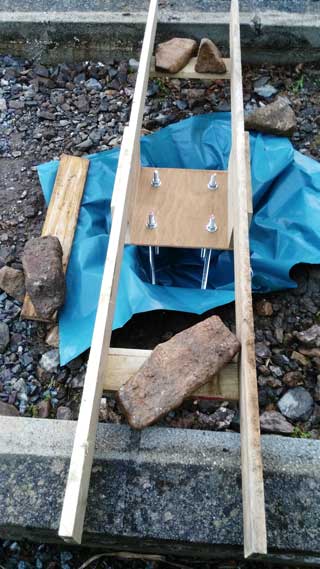 A damp proof membrane was inserted into the hole where the threaded rods were to be concreted into the ground.
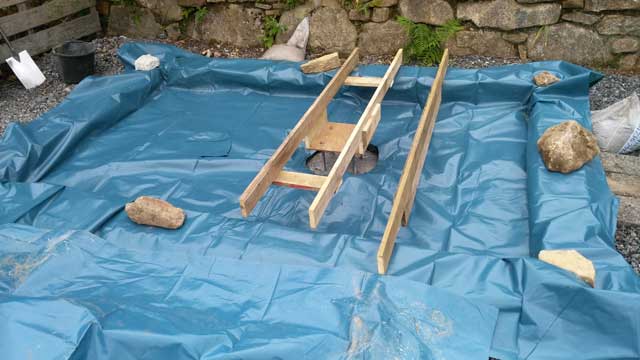
The whole base was then covered with a damp proof liner ready for concreting.
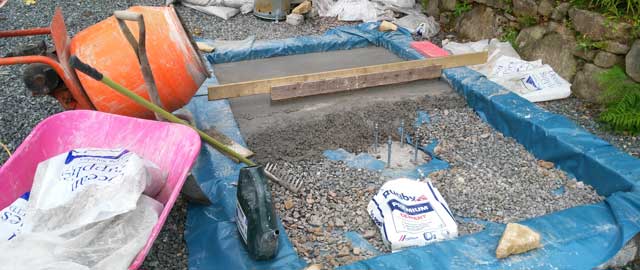
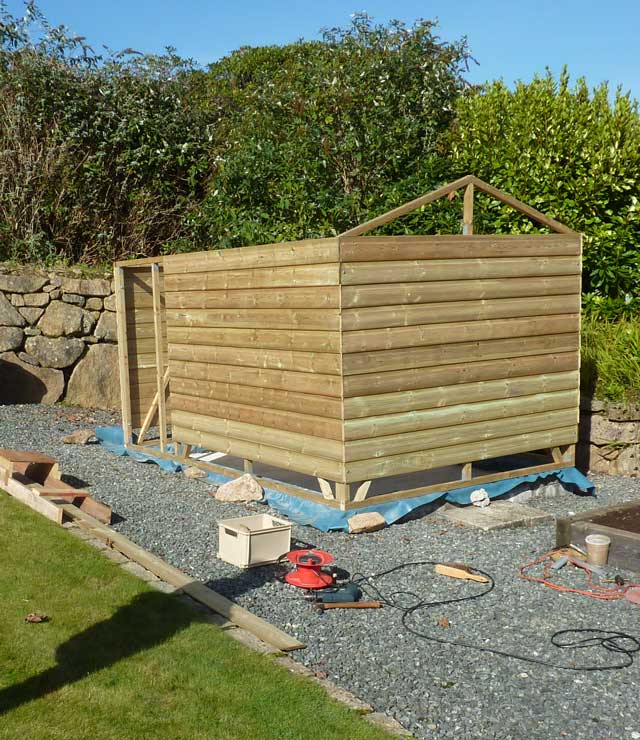
Once the base was complete, the main construction of the observatory was built from a 2×2″ framework and ship-lap exterior. The interior was lined with 40mm celotex and 9mm plywood to provide excellent insulation.
The warm area roof (fixed) is shown below and consists of 18mm exterior plywood.

The roll off roof was to be mounted on aluminium guides so that it could be jacked up and rolled off. This would provide an excellent seal against the weather when the roof was closed. In order to make the roof rigid, 3 steel supports where made and bolted to the roof with M8 countersunk bolts. The roof consists of 2 uncut 8’x4′ 18mm exterior plywood sheets at a pitch of 19 degrees. To construct the roof, it was first screwed in place so that the steel supports could be bolted securely in place as shown below.
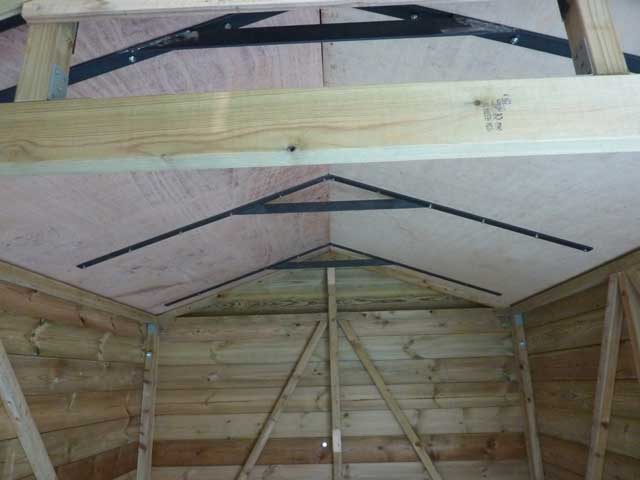
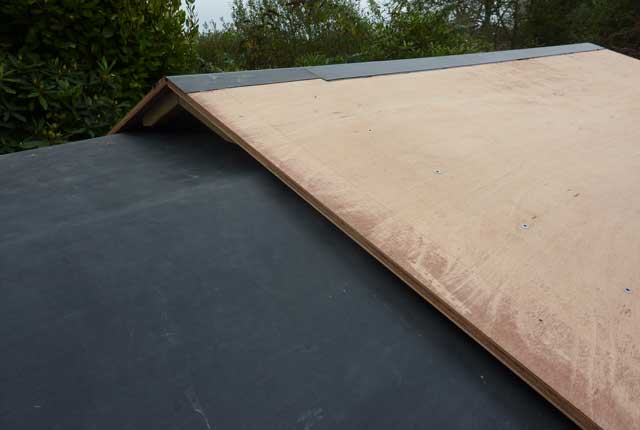
Three steel supports angled at 19 degrees were manufactured by a helpful local engineering company PR Laffin Fabrications and used to form the roof structure . Once bolted to the steel roof supports the external plywood could be unscrewed. Here you can see the roll-off roof to the right and the fixed warm room roof to the left which has already been covered with black EPDM rubber.
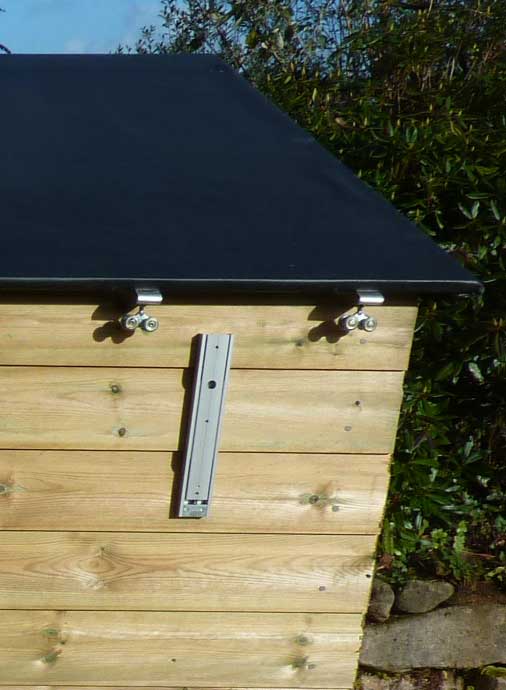
In order to support the roll-off roof, 14 aluminium brackets were constructed (7 for each side of the roof) which would carry the roll mechanisms. The rollers used are normally meant to be used on sliding drive entrance gates and so offer excellent weather resistance. Below are 7 of the brackets and one of the roller mechanisms. The brackets are bent at 19 degrees to match the pitch of the roof.

The brackets and rollers were then bolted to the roof before finally covering the roof with EPDM rubber (see below). You can also see one of the four aluminium sliders that will be used to guide the roof when it is jacked up to be rolled off.
Here is the roof jacked up and rolled off. The gate rollers run in a steel track supported on 4″x2″ timbers which themselves are secured to the 4 aluminium guides (2 on each side). Four steel rods inserted into the aluminium guiders hold the steel track in place whilst the roof is open. See the link below for a short video showing how all this works.

The take-off rail is above the roof rail when in the closed position…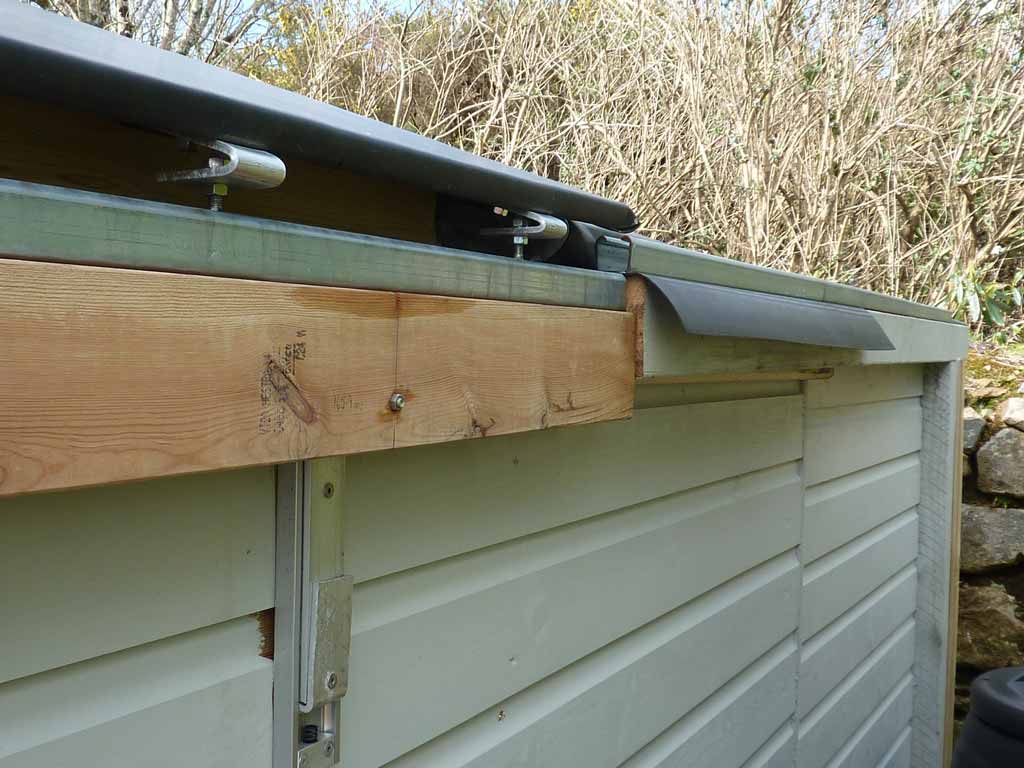
Roof in the closed position… 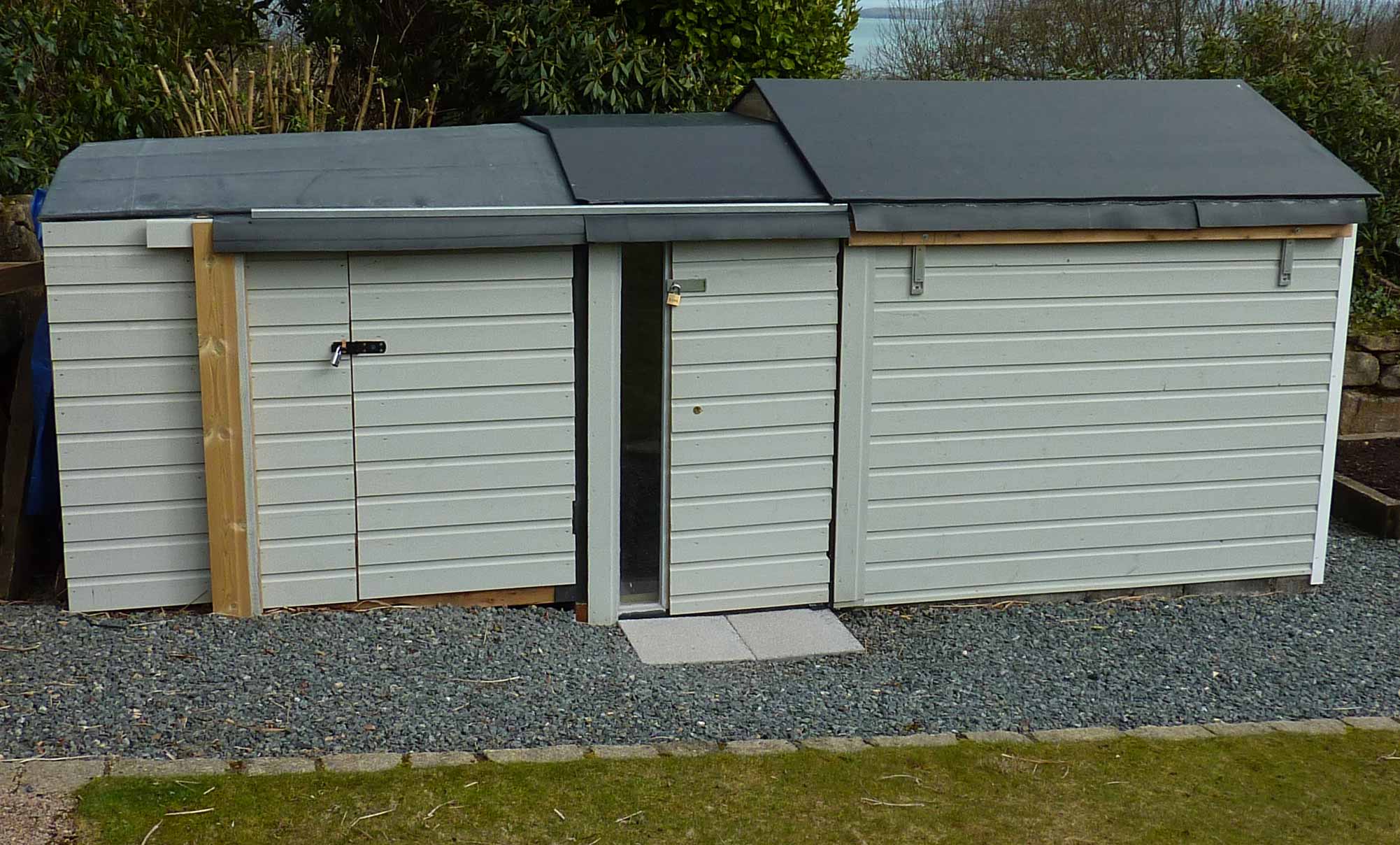
Here’s an exciting video 🙂 of how it all works…Automated Roof Closure
Having opened the roof I decided that I would like the roof to automatically close itself in the event that the clouds rolled in. Then I could set up a long photographic session and go to bed without worrying about the equipment being damaged by rain. Maxim DL will invoke an alert if the guide star is lost for more than a defined number of cycles. The alert calls a script that does the following:
- Parks the telescope
- Verifies that the telescope is within 5o of its parked position in both altitude and azimuth
- Via a USB port activates relays to close the roof using a 12v winch
- A micro switch stops the roof at the appointed place although after 40 seconds the power is cut by the script as an additional safety feature
Here’s a video showing the automated roof closure…
2 Responses to September Observatory Construction